THANK YOU! CODECON #BRATISLAVA
#CODECON2026 is officially over!
Thank you all for joining us and for the amazing atmosphere.
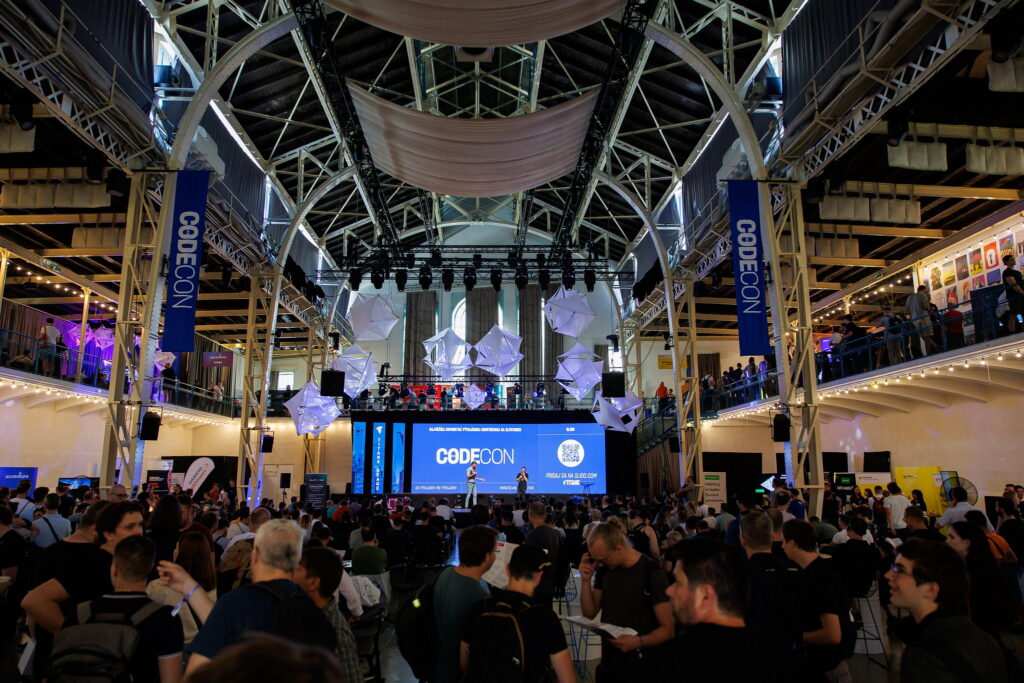
CODECON #Bratislava is the biggest community meetup for developers in Slovakia. Every year, more than 1,500+ developers, dozens of speakers and awesome vendors come together at the conference.
Want to be part of the community too? See you at the next meetup ツ

Meet the speakers of CODECON #Bratislava 2026
Panel Discussion: What should effective IT education look like in the age of AI?
I am an entrepreneur with a passion for education and technology. I lead the IT academy Mini Tech MBA, designed specifically for women. Through the academy, hundreds of women have gained confidence, career opportunities, and fair pay in the tech industry. I inspire women to explore the world of IT, highlight the stories of successful women in tech through podcasts, and advocate for greater female representation in the tech ecosystem. I hold a PhD from Comenius University and was named to the Forbes 30 Under 30 list for my achievements in education.
Dell Pro Max — how does it perform for application development
General Manager of Dell Slovakia and President of AmCham Slovakia.
I bring nearly 30 years of experience in enterprise IT, strategy, and leading teams in international environments. I connect technology, business, and the public sector. My work focuses on how AI is reshaping real-world operations—from decision-making to delivery. I see AI as a tool; responsibility and final decisions remain with people.
How to scale CI/CD for hundreds of applications without losing autonomy
I’ve experienced software development from multiple perspectives — as a developer, team lead, DevOps engineer, and software architect. I’ve been focusing on architecture for a long time and currently work as a Staff Engineer at Multitude. I believe that well-chosen and properly integrated tools can improve the development process, increase efficiency, and enhance the quality of delivered software.
Using drones to analyze traffic flow.
I work as the Team Leader of Data Infrastructure Operations in the Data Department at the City Hall of the Capital of the Slovak Republic, Bratislava. I am responsible for managing databases, ETL processes, and GIS solutions. In my professional work, I focus on the use of UAV technologies for data collection and analysis, particularly in the areas of traffic intensity and urban planning.
Program of CODECON #Bratislava 2026
The doors to CODECON open at 08:00. All conference participants must be registered in advance. Entry to the conference is permitted at any time during the day with a valid ticket.
👉 IMPORTANT! Before entering the conference, have your QR code/ticket ready, which you received by email after successful registration. Please collect your wristband at the entrance to the Old Market Hall upon presenting your valid ticket with a QR code.
The program takes place across three stages: the TITANS STAGE (the main stage on the ground floor of the Old Market Hall), the Accenture STAGE, and the IBL STAGE (a silent stage on the upper floor). Throughout the day, you can also visit the Slove Meetup Zone — a space for networking, meeting speakers and organizers, and joining open discussions on well-being, mindset, and sustainable performance.
Developers, today is all about you — enjoy it to the fullest.





Your front-end started as a sleek prototype. Today it's 200,000 lines, builds take forever, and every merge request is a game of Russian roulette. Sound familiar?
In my talk, I'll show you how to carve a monolith into independent pieces that teams own, deploy, and scale on their own — without big-bang rewrites and without weekend hotfixes.

AI agents communicate with users in text form, much like mainframe and early personal computers did in the 1980s. Text-based interaction was later replaced by faster and more intuitive graphical user interfaces, such as those in Macintosh and Windows, and eventually on mobile devices.
A similar revolution is now taking place in the interaction between humans and AI agents: dynamically generated interfaces are beginning to replace traditional text-based dialogue.
In this session, we will demonstrate through live coding how agents can dynamically generate interaction flows for fast and unambiguous communication, as well as dashboards for visualizing results, using the standard A2UI protocol.

Building complex visualisations quickly pushes the DOM to its limits. How can you smoothly render millions of data points? Through practical examples, we'll walk through a custom web rendering architecture, focusing on transferable engineering principles and how to automate testing for these visual outputs.
Read more
You can read everywhere about deploying "large scale applications" on AWS. There's less talk about deploying small apps on AWS.
In my presentation I'll show the audience why it's worth trying to deploy a serverless application on AWS - wether it's a hobby project or a small app fro a few users. We'll explain the difference between traditional VPS hosting and AWS serverless. You'll learn the benefits of serverless, but also its limits and what to watch out for. Attendees will learn to be frugal not only for hobby projects but also later in production projects. Technologies we'll talk about: AWS - Lambda, DynamoDB, CloudFront, S3, CDK; TypeScript; SvelteKit; Node.js and similar.

The biggest challenge in developing software dependent on Machine Learning models is transferring the model itself—especially input transformations—from a prototype into production. I’ll introduce the architecture of our MLOps platform, which aims to overcome traditional barriers between research and real-world operation through the synergy of Rust and Python. The platform handles not only inference, but also the entire model life cycle—from idea and data preparation to training, validation, and the point where a prototype becomes a real product.

If you’ve been going full throttle for too long, this talk is for you.
We scale everything—products, teams, performance. Just one more sprint. One more quarter. But your own capacity isn’t infinite. What happens when your performance hits its limit?
Andrej, a manager at a tech company, openly shares his recent experience with burnout—what he overlooked, what he didn’t want to admit, and where things started to break down. A psychologist specializing in burnout adds an expert perspective: what’s happening in your mind and body in those moments, why burnout often goes unnoticed until it’s too late, and what you can do before it completely shuts you down.
This isn’t a talk about work-life balance. It’s about a limit most of us think lies somewhere else. If you work in tech, chances are you’ll see yourself in it. And you’ll walk away with concrete things you can change—while there’s still time.


AI is changing how we build software — but not always in the way we expect. Through real examples from developing a core system used by 7 insurance companies, we will show where AI truly helps in implementation and where it leads us to the “dark side.”
We demonstrate that AI brings not only higher productivity, but also new challenges: a shift of responsibility into code review, increased technical debt, and the need for a strong human-in-the-loop approach. This is not just a change in the developer’s role, but a transformation of the entire SDLC — and the decisions we make within it.

AI & tooling synergy, Smocker & Wiremock mockservers, dependency management - Dependabot & Renovate, diagram versioning - PlantUML & Mermaid, automated usability testing, real user monitoring and traceability - AI agents, feature flagging - Growthbook, server-sent events - Mercure, translation automation - Lokalise, enterprise tools.
Read more
The attackers named it themselves. Shai-Hulud burrowed into npm in 2025 — we felt the teeth firsthand. One poisoned install turns developers into unwitting worm-riders. We'll go deep, then gear up: three changes you can apply today. Fear is the mind-killer. Paranoia is good engineering.
Read more
We tested Dell Pro Max with OLLAMA and local LLM models on practical tasks in the Total.js environment. We’ll show attribute extraction from text, source code generation for the Total.js Platform, and the creation of widgets, extensions, and database schemas for Total.js applications.
Read more

How can AI run directly on your smartphone? This talk explores the current capabilities of local LLMs without relying on the cloud. We’ll cover hardware and software constraints, real-world performance, and limitations. Using medical data examples, we’ll demonstrate extraction, summarization, and interpretation.
Read more
AI agents today can generate code, design solutions, and automate an ever-growing share of development work. This discussion will focus on the value of a developer in an environment where AI is taking over parts of their work—and what that actually means for their day-to-day responsibilities.
We’ll explore which skills are losing relevance and which are becoming more important, as well as whether the developer’s role is shifting toward that of an architect, an AI tool operator, or something else entirely.
We’ll also open up some less comfortable questions: what this means for juniors, where AI is already replacing human work and where it still falls short, and how to prepare so that developers don’t become mere executors of AI-generated ideas, but remain the ones who set the direction.

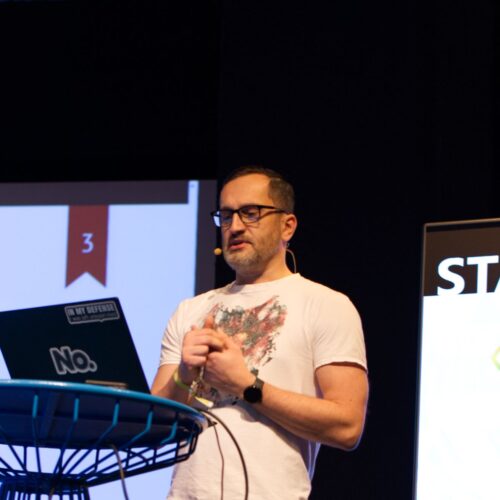
Scaling CI/CD for hundreds of teams often fails the same way: each repo uses its own pipeline, inconsistency creeps in, and governance becomes a bottleneck. I will present a technology-agnostic architecture of a centralized CI/CD platform serving hundreds of apps without sacrificing team autonomy. I will walk through a design based on composition of reusable workflows that standardize build, test, release, and deploy, where apps define only minimal validated configuration. I will focus on the contract between application and platform, policy-as-code, quality gates, and automated release process. Details demonstrated using GitHub Actions, but principles are transferable across CI/CD tools.
Read more
We encounter presenting more often than we realize, at meetings, during demos, in discussions, and even in front of larger audiences. In this short workshop, you will learn how to capture attention from the very first seconds, explain even complex topics clearly, and come across as confident. You will leave with practical tips you can use as early as the next day, tips that truly work.
Read more
The presentation focuses on the use of UAVs for analyzing traffic behavior in Bratislava. It demonstrates data collection, vehicle detection and tracking using AI (YOLO), speed estimation, and collision risk assessment. The goal is to support more efficient traffic planning and urban management.
Read more
Lunch break, during which you can arrange a proper hot meal. We recommend planning your lunch in advance—either by making a restaurant reservation or ordering via Wolt, Bolt Food, Bistro.sk, or another delivery service. As CODECON is a free conference, meals are not provided.
Read moreAI Battle is a live coding competition where participants go head-to-head solving programming challenges using modern AI coding agents. The goal isn’t to write code manually, but to collaborate effectively with AI tools and demonstrate how they can accelerate solving real-world problems.
Read more


Building an AI model is one thing. Getting it to run inside a real hospital is something else entirely. In this talk, I will share what it was like to take a cardiovascular AI system from an early prototype to software that is now used in clinical practice across the EU. I will focus on the technical side: messy hospital IT systems, limited digital data, security checks, integrations, and the small design choices that matter when your code supports real medical decisions. If you are curious what it really takes to move from a cool demo to a product that works in the real world, this session will give you a clear and honest look behind the scenes.
Read more
Pick a domain, choose a framework, open Vercel – and watch what you can ship in under 2 hours. No manual API wrappers. Just you as the architect and AI as your build crew.
Read more
Career growth in IT is often presented as a clear and predictable path, but in reality, most developers never experience it that way. Both junior and senior engineers get stuck – not because they lack skills, but because of misplaced expectations.This talk explores a topic rarely discussed at conferences: how to move forward when there is no clearly defined direction. Drawing from real experience, it shows why progress depends on horizontal growth, taking ownership, stepping up where others hesitate, and not becoming the kind of colleague people avoid working with.
Direct, pragmatic, and without illusions.

Large CI systems "generate" failed tests across many repos and teams. You spend time searching for the change linked to each failure. This talk shares lessons from building LLM-assisted solution with root-cause suggestions after regression builds.

Home observability at a glance: combining Deno, Prometheus and Grafana to observe a Solax solar inverter. Step-by-step setup description, especially suitable for beginners.
Read more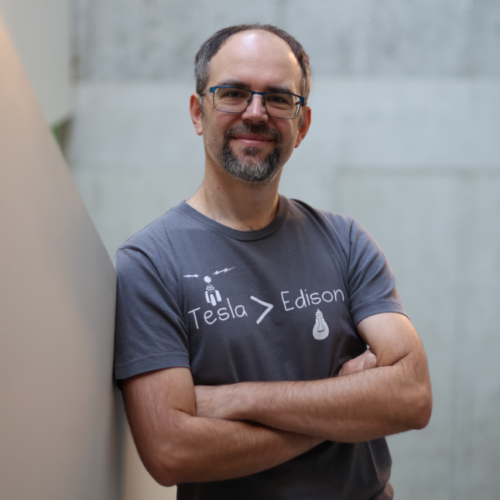
What if the path to higher performance isn’t about putting in more effort, but about making better use of what comes naturally to you? This talk shows why it pays to know your strengths—and how to actually use them in your work. You’ll explore how to recognize your natural way of operating and use that insight to assess whether the work you’re doing is the right fit for you.
Read moreThis presentation will show how a young person can get involved in interesting projects and collaborations with companies starting as early as their first year of high school. Listeners will gain practical tips on where to look for opportunities, how to approach companies even without prior experience, and how to build a portfolio, network, and personal brand. They will learn how to work on themselves systematically, develop their skills, and move forward step by step. The goal is to motivate action and present a practical plan that they can use in their own projects and future careers.
This presentation will also provide specific tips on where to find opportunities.

Introduction of Aspire as a tool for local orchestration of (micro)services and their dependencies (database, storage, IdP). It enables faster, smoother development and testing, improves understanding of project topology, and simplifies debugging.
Read more
Traditional data warehousing relies on slow procedures and rigid orchestration. I’ll walk you through our path to finding the perfect stream processing setup—moving from ksqlDB to Flink and finally to Snowflake Dynamic Tables. Discover how we reached low latency, ditched Airflow, and learned to keep costs under control without compromising on speed.
Read more
Have dozens of ideas but not sure which one won’t waste months of your life? At NodeonLabs, we developed a rigorous vetting system for filtering projects. I’ll show you our recipe for how to stop building things nobody wants. Get tips on AI-powered validation, market analysis, and the exact point when it’s worth writing the first line of code. No theory, just a practical guide.
Read more
Effective IT education in the age of AI is no longer measured by the amount of knowledge, but by the ability to create value. This discussion will focus on what actually works in practice today.
We’ll also address how the roles of universities, bootcamps, and employers are evolving, with companies increasingly taking responsibility for talent development. We’ll take an honest look at an uncomfortable reality: which skills companies truly lack and why traditional education fails to deliver them.
A key theme will be the difference between people who simply use tools (including AI) and those who can think critically, make decisions, and move products forward—along with the question of how to use AI in a way that supports understanding and critical thinking, rather than just providing quick answers.




How do you build a reliable construction-activity map from hundreds of municipal notice boards, PDF files and national registries? I’ll show a practical pipeline that turns messy, inconsistent inputs into a searchable geospatial dataset – from ingestion and extraction to geolocation, updates and map-based querying.
Read more
Many companies today are exploring how to leverage AI on their own data—datasheets, technical documentation, CSV files, or REST API sources. However, it is often mistakenly assumed that the solution is to train a custom language model. In practice, a Retrieval-Augmented Generation (RAG) architecture is usually a more efficient and cost-effective approach. In this talk, we will demonstrate how to design and implement your own RAG solution on company data without the need to train a custom LLM. We will cover the entire process: extracting data from PDFs and CSVs, creating embeddings, using a vector database, designing prompts, and integrating with open-source models such as Mistral 7B or LLaMA 2. We will also showcase a practical architecture.
Read more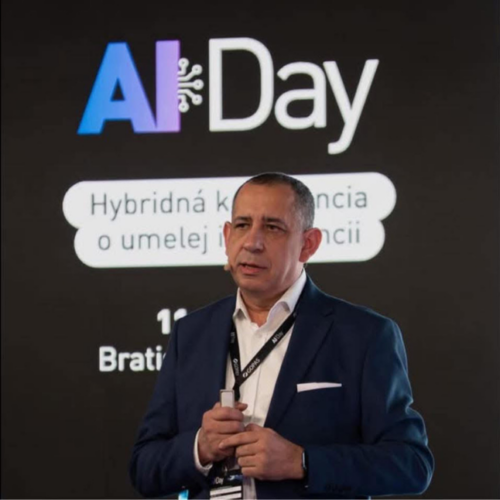
Deploying an LLM to production without an architecture that governs it is a major security risk. Relying solely on instructions in the system prompt is no longer sufficient—any skilled attacker can bypass them in seconds.
In this talk, we’ll explore how to approach AI using Zero Trust principles. We’ll cover supply chain security (AI BOM), digital model signing with Sigstore, and the deployment of an independent guardrails layer.
In a live demo, we’ll show how a standalone orchestrator can filter attacks (such as prompt injection) in real time and keep the model within the boundaries you define.

Behind every game, there’s a story—not just the one the player experiences, but also the one that emerges during its creation. Take a look inside the making of Medieval, from the initial vision to the final execution. This talk explores how a game comes to life, bringing together creative ideas, technology, and production decisions into one compelling experience.
Read more
Production outage. PagerDuty is ringing. Slack is exploding. Sound familiar? I'll share practical experience with incident management. We'll walk through the entire incident lifecycle:
- monitoring and alerting without alert fatigue
- on-call rotations without burnout
- war room and roles during an incident
- escalation
- customer communication via status page and RCA report
- blameless post-mortem with concrete action items.
For DevOps, SRE and developers — for anyone who wants to handle incidents calmly and effectively.

Old Market Hall
CODECON #Bratislava takes place at the Old Market Hall – one of the most important cultural and social landmarks in the Slovak capital.
The Old Market Hall is a vibrant community space that supports non-profit initiatives, cultural events, and local farmers. It hosts a variety of activities that have long been enjoyed by city residents, visitors from other Slovak cities, and international tourists.

Partnership
We regret seeing talented Slovaks leave the country. Let’s support the developer and IT community in the region together. Let’s create synergies, new opportunities, and exciting projects—and push technology forward as a community. Join the CODECON community today!
What People Are Saying About Us
Program Committee
Our mission is to deliver top-notch, engaging content on topics that truly resonate with our community.
To ensure an exceptional experience, we have assembled a strong Program Committee responsible for selecting the best content and ensuring that only the most inspiring and cutting-edge topics make it to the conference.
We look forward to more shared experiences!
How was CODECON #Bratislava 2026 together with us? A fresh batch of photos from Bratislava is on the way!